About us

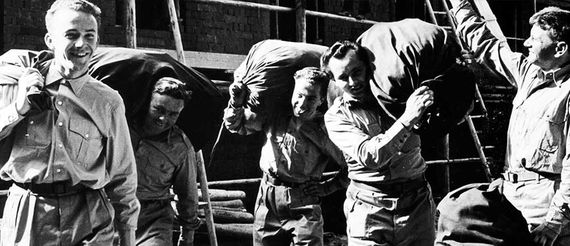
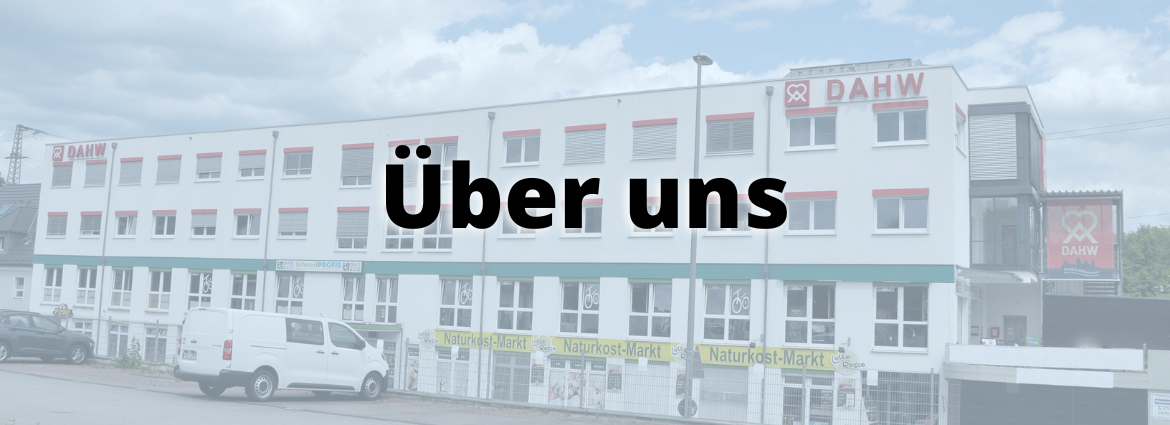
1947The German Leprosy and Tuberculosis Relief Association (DAHW), founded in 1957, is a non-profit organisation with headquarters in Würzburg, Germany. It has 62 members. The eight-person Board works on a voluntary basis. For 50 years, DAHW has been helping millions of sick and marginalised people in Africa, Asia, Central and South America. It supports more than 300 relief projects in about 40 countries. DAHW is politically and denominationally independent.


The priorities

The core activity of DAHW is to cure people affected by leprosy and tuberculosis. DAHW takes care also of people who have contracted HIV or who are suffering from AIDS. It combats forgotten diseases such as Buruli ulcer (an infectious disease, similar to leprosy, in Africa, that causes disfigurement, mainly in children), Chagas disease (transmitted by assassin bugs in South and Central America; it causes damage to the nervous system, heart and gut) and leishmaniasis (carried by phlebotomine sandflies in Asia and Africa; leishmaniasis affects the internal organs, skin or mucous membranes to varying degrees of severity). In places where DAHW has a good infrastructure, it also provides disaster relief, most recently in southern India following the tsunami of 26 December 2004, and in Kashmir, Pakistan, after the earthquake of 8 October 2005.


DAHW fieldwork

The success of DAHW is rooted above all in its effective support of field projects, hospitals, health centres, rehabilitation facilities and staff training. It works together with local partners, who are familiar with the local situation. DAHW also has its own field workers. In this way it is practising sustainable “help to self-help”.


The donors and donations

More than 80,000 people entrust DAHW with regular donations; many have been doing so for decades. DAHW publishes its figures. It is accredited by the German Central Institute for Social Affairs (DZI). In receipt of over € 10 million in donations, DAHW is one of the largest relief organisations in Germany.


A new name

For almost 46 years the German Leprosy and Tuberculosis Relief Association was called Deutsches Aussätzigen-Hilfswerk. In early 2003 the Association changed its name to reflect its second major focus of attention – tuberculosis, another major disease it has been combating since 1990. However, it is still known by the acronym DAHW for ease of recognition.


The network

DAHW works within national and international networks, such as:

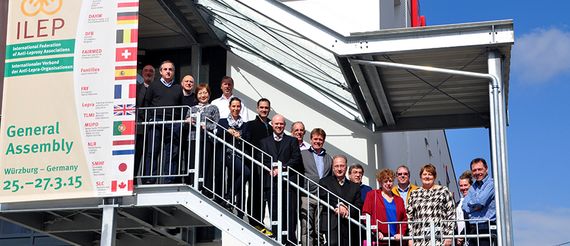
International Federation of Anti-Leprosy Associations (ILEP)

ILEP is an international federation of 14 independent anti-leprosy non-governmental organisations. It co-ordinates collaboration between its members for effective leprosy control. Resources are pooled, relief programmes receive reciprocal support, and ex-
perience is exchanged. (http://www.ilep.org.uk/)


Stop-TB Partnership

This is an alliance of over 350 governments and organizations, initiated by the World Health Organization (WHO). It works towards the controlled and standardized treatment of all persons infected with TB. Its objective is to halve the number of people with TB, and those who die of it, by 2015. A further goal is to reduce the number of new infections a year to under one million by 2050. (http://www.who.int/tb/strategy/en/)

Action against AIDS

This is a federation of around 400 organisations active in the field of AIDS and development co-operation, including grassroots groups and parishes. Its aim is to ensure that political bodies and the pharmaceutical industry assume responsibility in the fight against AIDS. (http://www.aids-kampagne.de/)

VENRO – Association of German Non-Governmental Development Organisations

Approximately 100 German non-governmental organisations have joined forces as VENRO. Their development policy embraces human rights and the realisation of the United Nations’ Millennium Development Goals against poverty, hunger, illiteracy, loss of environmental resources and gender discrimination. (http://www.venro.org/)

United for Africa

Thirty relief organisations have joined  together with “United for Africa” as their motto. They highlight the situation of the people in Africa and make joint fundraising appeals to the German public. The German TV newsreader, Anne Will, is one of the campaign’s ambassadors. (http://www.gemeinsam-fuer-afrika.de/index_en.php)